
 English
 Deutsch
 한국어
한국어 Русский
 Français
 日本語
日本語 لالعربية
 हिन्दी
 Español
 Português
 繁体中文
繁体中文 简体中文
简体中文



























产品
 知识
知识
2026-02-07 13:34:58
Guide to Matching Explosion-Proof Telephones with Explosion-Proof Ratings and Gas Groups
This guide details the classification of explosion-proof telephone ratings, gas group divisions, and core matching principles. It provides practical selection steps and warnings against common pitfalls in hazardous environments such as petrochemical and coal mining. Based on the GB/T 3836 standard, it assists technicians and purchasing personnel in accurate matching, ensuring safe on-site communication.

贝克电信
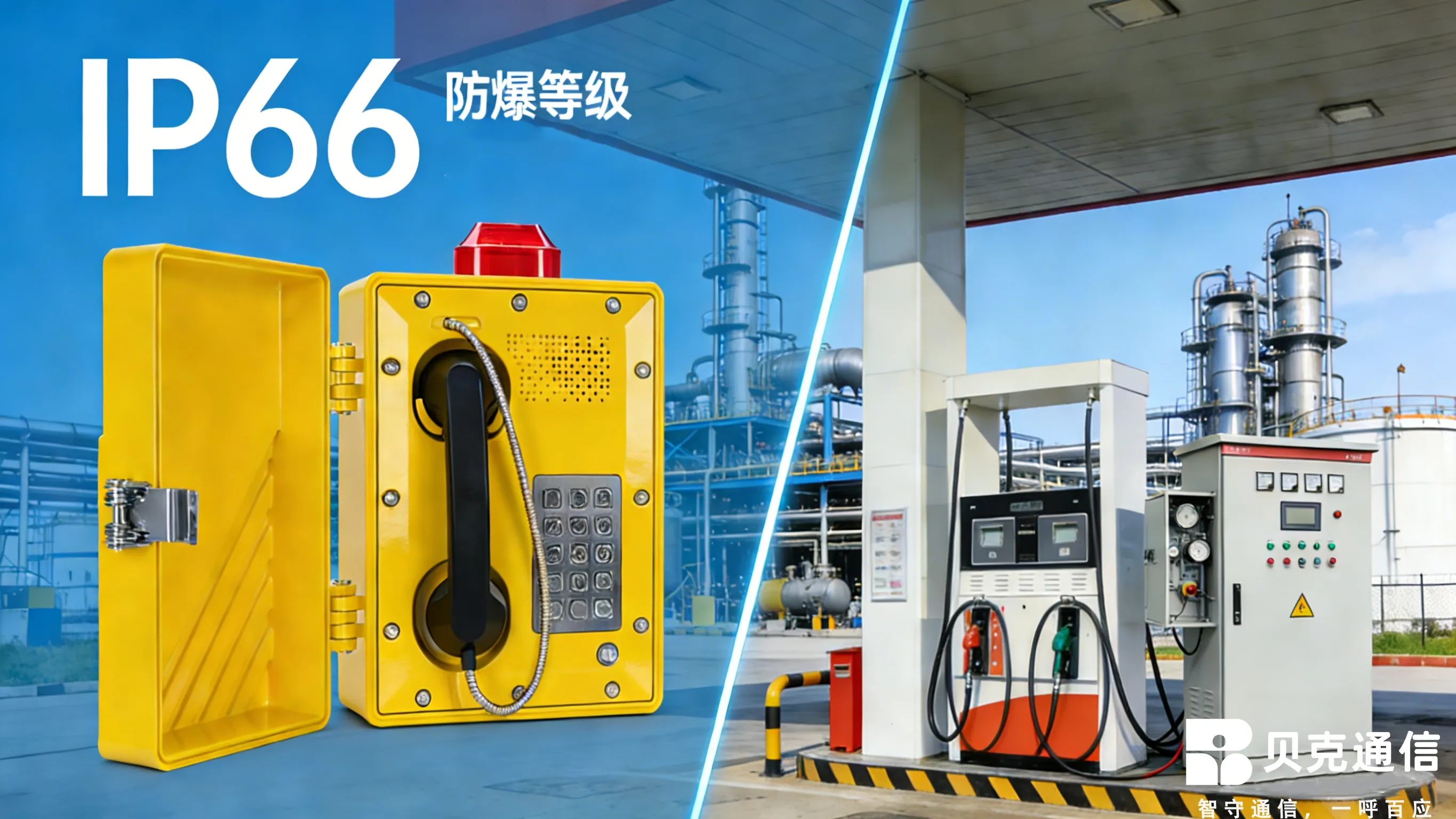
Explosion-proof telephones are core communication devices in flammable and explosive environments. Their safe operation fundamentally depends on the precise matching between the explosion protection level of the device and the hazardous gas group present on site. Improper matching not only renders the explosion protection ineffective, but may also trigger explosions caused by internal electrical sparks or high surface temperatures, resulting in equipment damage, casualties, and production shutdowns.
At present, the classification of explosion protection levels and gas groups for explosion-proof telephones in China strictly follows the GB/T 3836 series of national standards, which are fully aligned with the international IEC 60079 standard. This harmonization ensures both equipment compatibility and operational safety, providing clear and reliable selection guidance for B2B purchasers and technical personnel.
I. Core Understanding of Explosion Protection Levels for Explosion-Proof Telephones
1.1 Basis and Standards for Explosion Protection Classification
The explosion protection level of an explosion-proof telephone measures its ability to prevent ignition of surrounding explosive atmospheres in hazardous areas. This classification is determined by the type of explosion protection and the equipment protection level, and is governed by national standards such as GB/T 3836.1-2021 “Explosive Atmospheres – Part 1: Equipment – General Requirements”, which officially became the core basis for mandatory certification of explosion-proof electrical equipment on May 1, 2022.
Common explosion protection types used in explosion-proof telephones include:
Flameproof enclosure (Ex d)
Intrinsic safety (Ex i)
Increased safety (Ex e)
Among these, Ex d and Ex i are the most widely applied.
Flameproof (Ex d) protection relies on a robust enclosure that contains internal explosions and prevents flame propagation to the external atmosphere.
Intrinsic safety (Ex i) limits circuit energy to ensure that electrical sparks or thermal effects generated under normal or fault conditions cannot ignite explosive mixtures.
1.2 Common Explosion Protection Markings and Their Meanings
Explosion-proof telephone markings typically follow the format:
Ex + protection type + gas group + temperature class + equipment protection level (EPL)
For example: Ex d IIC T4 Gb
Each element represents a critical safety parameter and forms the basis for correct gas group matching:
Ex: Explosion-proof marking indicating compliance with standards
Protection type (d, i, etc.): Structural principle of explosion protection
Gas group (e.g., IIC): Type of hazardous gas environment
Temperature class (e.g., T4): Maximum surface temperature during operation
EPL (e.g., Gb): Applicable hazardous zone (Zone 1 / Zone 2)
Based on application scenarios, explosion-proof telephones are generally divided into:
Group I: For underground coal mines (methane environments)
Group II: For explosive gas environments other than coal mines
Group II is further subdivided into IIA, IIB, and IIC, with higher levels indicating stronger explosion protection and broader gas compatibility.
II. Classification of Hazardous Gas Groups and On-Site Identification
2.1 Core Criteria for Gas Group Classification
Hazardous gas groups are classified based on explosibility, specifically ignition sensitivity and explosion risk. Both international standards and the GB/T 3836 series use two key parameters:
Maximum Experimental Safe Gap (MESG)
Minimum Ignition Current Ratio (MICR)
Based on these parameters, explosive gases (excluding mine methane) are classified into IIA, IIB, and IIC, while Group I is reserved for methane in underground coal mines.
Smaller MESG values and lower MICR indicate higher ignition sensitivity and explosion risk, requiring stricter equipment protection.
Representative gases and parameters include:
Group IIA: Propane, gasoline, acetone
MESG ≥ 0.9 mm, MICR > 0.8
Lowest explosibility, requires higher ignition energy
Group IIB: Ethylene, coke oven gas, dimethyl ether
0.5 mm < MESG < 0.9 mm, 0.45 ≤ MICR ≤ 0.8
Moderate explosibility
Group IIC: Hydrogen, acetylene, carbon disulfide
MESG ≤ 0.5 mm, MICR < 0.45
Highest explosibility; even tiny sparks may cause explosions
2.2 Typical Gas Group Distribution by Industry
Accurate identification of on-site gas groups is a prerequisite for proper equipment selection:
Coal mining: Primarily Group I methane, occasionally accompanied by small amounts of Group IIB gases
Petrochemical industry: Covers IIA, IIB, and IIC
Refining units: mainly IIA (gasoline, diesel vapors)
Chemical reactors: may involve IIB (ethylene)
Hydrogen production/storage: IIC
Pharmaceutical industry: Mostly IIA (acetone, ethanol vapors), with occasional IIB gases in fine chemical processes
Metallurgical industry: Primarily IIA and IIB, such as coke oven gas (IIB)
III. Core Principles for Matching Explosion Protection Levels and Gas Groups
3.1 Fundamental Matching Logic
The fundamental rule is:
The explosion protection level of the equipment must be equal to or higher than the highest hazardous gas group present, and the temperature class must be lower than the minimum ignition temperature of the gas.
Both conditions are mandatory for safe operation.
From a gas group perspective:
IIC equipment is downward compatible with IIB and IIA
IIB equipment is compatible only with IIA
Reverse use is strictly prohibited
For example, using an IIB-rated telephone in a hydrogen (IIC) environment poses a severe explosion risk, whereas an IIC-rated telephone can be safely used in mixed or uncertain gas environments.
From a temperature class perspective:
The maximum surface temperature of the device must be lower than the gas’s minimum ignition temperature.
For instance, in an acetaldehyde vapor environment (minimum ignition temperature 140 °C), a T4 device (≤135 °C) is acceptable, while a T3 device (≤200 °C) is not.
3.2 Matching Differences by Explosion Protection Type
Different protection types exhibit different matching characteristics:
Flameproof (Ex d):
Suitable for IIA, IIB, and IIC gases. IIC-rated Ex d equipment requires extremely tight flamepath tolerances per GB/T 3836.2, making it suitable for dusty and harsh environments (e.g., coal mines, metallurgical plants).Intrinsic safety (Ex i):
Offers excellent adaptability. IIC-rated Ex i telephones are ideal for hydrogen and acetylene environments, and for areas requiring frequent operation or complex wiring (e.g., chemical reaction zones).Increased safety (Ex e):
Primarily suitable for IIA and IIB environments; not recommended for IIC high-risk applications.
3.3 Common Selection Pitfalls
Common mistakes to avoid include:
Assuming higher is always better:
IIC equipment is more expensive; using it in purely IIA environments may cause unnecessary cost increases.Confusing gas group with temperature class:
Correct gas group matching alone is insufficient if the temperature class is inappropriate.Ignoring hazardous area classification:
EPL must match the zone: Gb for Zone 1, Gc for Zone 2.
IV. Industry-Specific Matching Examples
4.1 Petrochemical Industry (IIA Scenario)
Scenario: Refinery transfer workshop with gasoline and diesel vapors (IIA), ignition temperature 280 °C, Zone 2.
Solution: Ex d IIA T3 Gc explosion-proof telephone, suitable for oily and dusty environments, with adequate temperature and zone compliance.
4.2 Coal Mining Industry (Group I Scenario)
Scenario: Underground mining face with methane (Group I) and trace IIB gases, Zone 1, humid and dusty.
Solution: Ex i IIC T4 Gb intrinsic safety telephone with IP66 protection, ensuring compatibility with mixed gases and harsh conditions.
4.3 Fine Chemical Industry (IIC Scenario)
Scenario: Hydrogen storage area (IIC), ignition temperature 560 °C, Zone 1, high pressure and corrosive environment.
Solution: Ex d IIC T4 Gb flameproof telephone with robust enclosure and high safety margin.
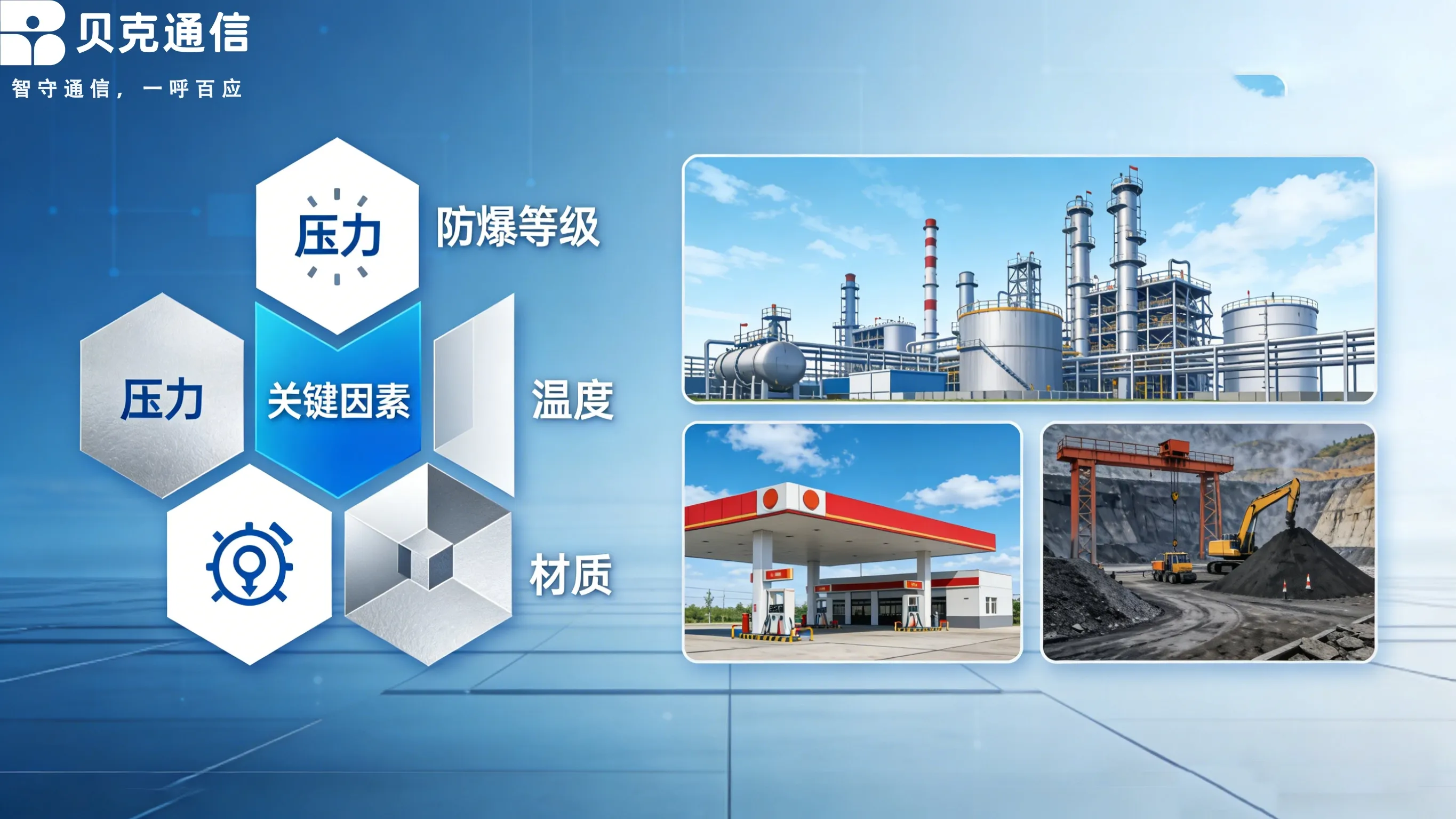
V. Practical Selection Guide: How to Choose the Right Explosion-Proof Telephone
5.1 Three-Step Selection Method
Confirm gas parameters: Identify gas group, minimum ignition temperature, and hazardous zone.
Select protection type and level: Choose Ex d or Ex i based on environment, ensuring the level is not lower than the gas group.
Verify temperature class and certification: Confirm compliance with GB/T 3836 standards and valid explosion-proof certificates.
5.2 Key Technical Verification Points
Check completeness of explosion-proof markings
Verify certification documents and test reports
Ensure environmental suitability (IP65/IP66 for dust and moisture)
Confirm correct wiring, especially for intrinsic safety systems with safety barriers
VI. Frequently Asked Questions (FAQ)
Q1: Can an IIB-rated explosion-proof telephone be used in an IIC gas environment?
A: No. IIB protection is insufficient for IIC gases and poses serious safety risks.
Q2: How should equipment be selected if multiple gas groups are present?
A: Select equipment based on the most hazardous gas present and ensure temperature class compatibility.
Q3: What is the relationship between explosion protection level and IP rating?
A: They are independent. Explosion protection prevents ignition; IP rating protects against dust and water. Both must be satisfied.
Q4: Can imported explosion-proof telephones be used directly in China?
A: Only if their certifications are compatible with GB/T 3836 standards and fully match site conditions.
Conclusion
Accurate matching of explosion protection levels and hazardous gas groups is the cornerstone of safe communication in explosive environments and a critical competency for B2B purchasers and engineers. By following the core principles—protection level not lower than gas group, temperature class lower than ignition temperature, and correct zone classification—precise and compliant equipment selection can be achieved.
Avoid common pitfalls such as over-specification or misinterpreting temperature classes, and always prioritize certified products compliant with the GB/T 3836 series. Only through precise matching can explosion-proof telephones deliver reliable communication, prevent accidents, and safeguard industrial production.
标签:
相关新闻
2026-03-20
公网与专网无线通信如何通过 ROIP Gateway 实现融合
2026-03-19
PBX Performance Factors That Affect Syst
2026-03-19
2026-03-18
2026-03-18


电子邮件地址:
热线电话: